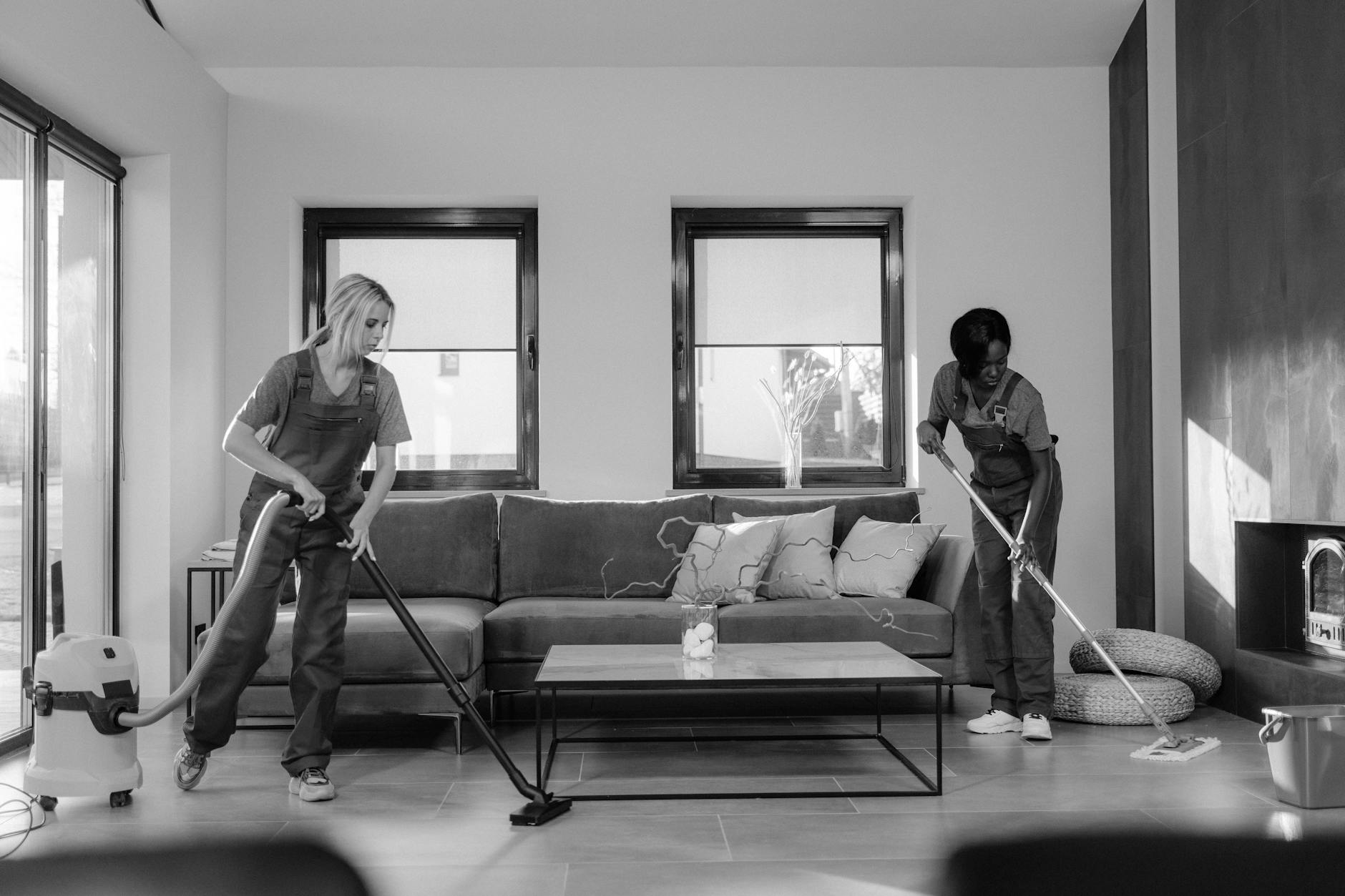
Deep Cleaning
For accumulated buildup, overlooked details and the spaces that need a more deliberate reset.
THE USA MAID / CLEANING SERVICES, CONNECTED.
From the first apartment to the forever home. From a working office to the next guest arrival. Find your clean through our regional partner network.
Real regional partners. Clear service choices. Availability and appointment details confirmed for your address.
01 / A CLEAN FOR EVERY CHAPTER
Choose the work that fits your space. Start with the priorities; your regional partner confirms the rest.
For accumulated buildup, overlooked details and the spaces that need a more deliberate reset.
Routine apartment cleaning starts with the rooms you use most: kitchen counters, bathroom fixtures, reachable dusting and suitable floor care. Choose your priorities and supply option, and submit the actual address for appointment confirmation.
Plan regular attention around the rooms and surfaces used most throughout the week.
Balance routine upkeep with the condition of the home between scheduled visits.
Set priorities for a longer interval between visits, with time for the work that has built up.
Coordinate an empty-property clean around keys, access, belongings and the handover.
Request review of settled project dust and safe, finished surfaces after contractor work.
Request a time-sensitive clean with the address, access window and highest priorities ready.
Plan furnished-rental cleaning around guest schedules, linen arrangements and accepted tasks.
Describe workstations, shared rooms and washrooms, with access that suits the business.
Carpets. Upholstery. Windows. Floor care. Explore the questions to ask before arranging a specialist service.
Looking for carpet, upholstery, window or specialist care? Start with our specialist cleaning guide and describe the actual material and task.
02 / BIG NETWORK. LOCAL KNOW-HOW.
The USA Maid is the master site. Our regional and local partner websites help you find the right starting point, with your booking handled by the partner for your area.
Explore the partner networkNew York City. Long Island. New Jersey. Connecticut. Pennsylvania. Florida. Explore regional partners and the wider national city directory.
How the network works ↗03 / START CLOSE TO HOME
Each partner reviews its service area and actual appointment availability. New York City stays with The NYC Maid; Fairfield and Stamford connect to Connecticut.
Five boroughs. One city.
The Long Island MaidNassau. Suffolk. Your home.
The New York MaidWestchester & the Hudson Valley.
The New Jersey MaidFrom apartments to family homes.
The Connecticut MaidA considered clean, closer to home.
The Pennsylvania MaidPhiladelphia & regional requests.
The Florida MaidHomes, rentals & working spaces.
04 / FIND YOUR PLACE
Search the national city directory, then request availability for your actual address. A directory entry does not guarantee local dispatch or a staffed office.
Explore 1,000 cities and communities. Appointment availability is confirmed separately.
05 / KEEP IT SIMPLE
06 / GOOD QUESTIONS
The USA Maid is the national master website for a network of regional cleaning partner websites. Browse services, explore cities and choose the regional partner that can review your address and request. The partner handling the appointment confirms the scope, pricing and availability.
No. The directory lets you explore 1,000 U.S. cities and communities. A listing is a starting point for an availability request, not a claim of a staffed office or an accepted appointment in every city. Use the regional partner or ask the national team about your location.
The booking page lets you choose the regional partner. New York City requests go to The NYC Maid; Long Island, New Jersey, Connecticut, Pennsylvania and Florida have their own destinations. The New York Maid handles its published regional area. Fairfield and Stamford requests go to the Connecticut partner.
Yes. The regional brands and local websites shown in the partner directory are partner sites within this network. Their local content helps you plan a request. The actual operator and its booking terms are identified on the destination website.
No national rate is published here. Pricing, minimum time, supplies, accepted tasks and any booking offer are confirmed by the regional partner. Read that partner’s current form and terms rather than applying a price from a different region.
The service directory includes household and business cleaning, plus planning guidance for specialist work. Carpet extraction, upholstery, high-access windows, restoration and hazardous conditions require a provider that accepts the specific task. They are not automatically included in an ordinary maid visit.
Choose your region on the hiring page and open that partner’s application. Applications are reviewed by the destination team. A city listing or a submitted application does not guarantee an assignment, employment or a specific schedule.
THE PRACTICAL CLEANING LIBRARY
The USA Maid brings regional cleaning partners together in one place. Start with the kind of work you need, then choose the area where the property is located. That order matters: an office clean, an occupied apartment and an empty-home handover are different requests even when they share a postcode. The regional partner needs the service address, room priorities, current condition and useful access instructions before it can confirm an appointment.
There is no single nationwide hourly rate on this website. A price from a New York City partner should not be treated as the price for Florida, Connecticut or any other region. Likewise, a supply arrangement, arrival window or cancellation term belongs to the operator that confirms the work. Read those details together before submitting payment or relying on a schedule. The destination partner’s form contains the options it currently offers.
Use the city directory to explore locations and the partner directory to identify the regional websites. A city listing is a useful route into a conversation, not evidence of a branch office or a team waiting at every address. Where a regional partner is not identified, ask the national team about the location rather than sending private access details to an unrelated company.
For households, a clear request usually names the kitchen, bathrooms, floors and reachable surfaces that matter most. For businesses, identify workstations, common rooms, washrooms and the parts of the premises that can be entered. Do not include passwords, medical information, alarm codes or financial documents in an initial inquiry. Arrange sensitive access details through the confirmed partner’s appropriate process.
The most useful cleaning plan is specific without being complicated. Explain the result you want, state the condition honestly and agree which tasks fit the accepted time. Keep household decisions with the household: deciding what to discard, handling valuables, packing for a move and caring for pets are not implied cleaning tasks. Specialist work should be identified before a visit rather than discovered after an ordinary appointment begins.
Two one-bedroom apartments can need very different cleaning plans. In one, the kitchen is used occasionally, belongings are already put away and the floors were recently maintained. In another, meals are cooked every day, a pet uses the living room, several people share the bathroom and it has been a while since anyone addressed the baseboards. The bedroom count gives a starting point, but it does not describe the work. Explain the current condition, the rooms that receive the most use and any tasks you have been putting off. That information is more useful than simply asking for a complete clean.
Think about the result you need from this particular visit. You may want the kitchen and bathroom handled before a busy week, an empty apartment prepared for a handover, or a more detailed first appointment before starting repeat visits. Write those priorities in order. If there is a time limit, identify the work that can wait. A cleaning request with a clear first, second and third priority gives the operator something concrete to review and gives you a more realistic basis for discussing the appointment.
Regular cleaning is generally the useful starting point when a home is already being maintained and needs attention to ordinary household tasks. A checklist can include agreed kitchen surfaces, the sink, bathroom fixtures, reachable dusting, vacuuming and material-appropriate floor care. The details should reflect how you use the home. Someone who cooks frequently may want more kitchen time, while a household with several bathrooms may want those rooms addressed before the bedroom furniture. Discuss bed making, trash handling and other preferences rather than assuming every task is automatic.
Routine cleaning and organizing are different kinds of work. A cleaner can reach a clear countertop more easily than one covered with mail, electronics, groceries and personal items. If you want help with tidying or organizing, describe it before booking so the requested time can account for it. Otherwise, putting belongings away beforehand helps preserve the appointment for actual cleaning. For the broader checklist and booking route, use the apartment cleaning service guide. Choose the service because it fits your home, rather than because its name sounds comprehensive.
A detailed first visit can make sense when ordinary maintenance has fallen behind or when you want work beyond the usual reachable surfaces. Examples include accumulated kitchen residue, bathroom buildup, dusty trim or interiors that have not been emptied and cleaned recently. Describe the condition plainly. There is no benefit in calling a visit regular cleaning if you actually need several hours of additional detail work. Equally, a deep-clean label does not make every possible task fit into the appointment. Ask which items are included, which need separate agreement and which should be scheduled for another day.
Choose the detail work that matters most instead of adding every item you can think of. If cabinet interiors are the priority, arrange to empty them and explain whether they will be ready on arrival. If appliance interiors are important, mention the type, condition and access. Do not include repairs, heavy moving or hazardous conditions under a general request for a deep clean. The deep cleaning guide is the place to compare a detailed visit with regular upkeep and to prepare a focused list for the operator.
A move changes the sequence of the work. An empty apartment makes some surfaces easier to reach, but it can also involve cabinets, closets and appliance interiors that are not part of an ordinary maintenance visit. Say when furniture will leave or arrive, whether the apartment will be empty and whether the property manager has provided a written checklist. If movers will still be working during the appointment, explain that too. A cleaner cannot efficiently complete a floor or a cupboard while the same area is being used to move boxes or store packing materials.
Plan the handover requirements separately from cleaning expectations. A lease inspection may involve issues such as damaged finishes, missing items or repairs that cleaning cannot resolve. Avoid treating a clean as a guarantee of a deposit return or an inspection result. Instead, agree on the surfaces and tasks to be handled, keep the written checklist available and arrange access to the rooms. The move-in and move-out cleaning page explains how to organize that request without mixing it with moving, repairs or property management.
A same-day request works best when the information is complete from the start. Enter the exact address, apartment number, useful arrival window, supply preference and the condition of the rooms. Explain why timing matters without assuming an immediate dispatch. If visitors are arriving later, identify the areas they will actually use. A focused bathroom, kitchen and living-room request can be more practical than asking for a whole-home detail clean within an already short window. The operator needs to review both the available time and the work before confirming an appointment.
Urgency does not change the scope of ordinary cleaning. A spill involving a hazardous substance, an infestation, sewage or a restoration problem should be described accurately and referred to an appropriate specialist. A same-day household cleaning request should remain a request for ordinary, safe tasks. You can read the same-day cleaning guide before submitting the form. Questions can be sent by text, but the online booking form is the route for entering the actual request and keeping the service details together.
For the kitchen, start with the surfaces that receive the most daily use. Counters, the sink, the accessible stovetop area and appliance fronts may be the most useful priorities for a maintenance visit. Describe any buildup that needs additional attention and identify surfaces with specific care instructions. Natural stone, unfinished materials and specialty finishes should not be treated as interchangeable. If you have manufacturer guidance or a product that must be used, leave the instructions where they can be found and mention the restriction in your request. Do not assume a cleaner will recognize the history or treatment of every surface.
Decide whether dishes, appliance interiors and cabinet interiors are part of this appointment. A full sink, a packed refrigerator or cupboards that have not been emptied can change the amount of work considerably. Explain what will be ready when the cleaner arrives and what should be left alone. Food, medication, personal containers and household records should not be discarded based on an assumption. A precise request might prioritize the sink and counters first, the stovetop second and an agreed appliance interior only if enough time remains. That order is clearer than a general instruction to make the kitchen perfect.
Bathrooms often need more planning than their floor area suggests. List the fixtures and the parts of the room you want included: the toilet, sink, tub or shower, mirror and suitable floor care. Explain whether there are several bathrooms and whether one should receive priority. A frequently used shower with visible buildup can take a different amount of attention from a guest powder room. Describe the condition rather than relying on the number of bathrooms alone. If a fixture is broken, leaking or unstable, identify it before the appointment and arrange the appropriate repair rather than expecting a cleaning visit to correct it.
Product restrictions matter here as much as they do in the kitchen. Leave instructions for special finishes and identify any materials that should not be treated with a particular product. Keep toiletries and private items organized so the requested surfaces can be reached. If an area has suspected mold, damaged caulking or another condition that needs specialist assessment, describe it instead of presenting it as routine scrubbing. Ordinary cleaning is not a substitute for remediation or repair. A good bathroom checklist makes the agreed surfaces, the priority order and any access limits easy to understand.
For bedrooms, explain whether the focus is reachable dusting, floors, bed making or a combination of those tasks. Put clothing, jewelry, personal papers and medication away before the visit. These items can prevent access to furniture and create uncertainty about what may be moved. If you want fresh linens put on a bed, leave the correct set clearly identified and discuss the request in advance. A linen change is easier to plan when the cleaner does not need to search through private drawers or decide which bedding belongs to which room.
Be specific about off-limit areas. A closed wardrobe, a desk used for confidential work or a drawer containing valuables can remain outside the checklist. Let the cleaner know whether anything is fragile, loose or difficult to move. Do not assume that a bed, dresser or storage unit can safely be shifted to reach underneath. If that space is important, discuss access and the limits of the task beforehand. For a home with several bedrooms, identify the rooms in priority order so an unexpected access issue in one room does not obscure the work you most want completed elsewhere.
Living rooms often contain a mix of surfaces, electronics, soft furnishings and decorative objects. Explain what should be dusted, which items should remain untouched and what can be moved safely. A collection of fragile objects or an entertainment setup with loose cables deserves a specific note. Cleaning around those items is different from disconnecting, rearranging or repairing them. If you work from home, say when the room can be accessed and whether a meeting or equipment setup needs to remain undisturbed. A simple room order can help everyone use the space during the appointment.
Choose a few practical preparations rather than trying to tidy the entire home perfectly. Move personal items from the surfaces you want cleaned, clear a route through the room and identify anything that is unstable. If a piece of furniture must remain in place, say so. A cleaner can then work to the agreed access rather than improvising with heavy objects. Reachable dusting and floor care can be planned clearly without claiming that every hidden surface will be handled. The more exact the access instructions, the less appointment time is spent resolving questions that could have been addressed in the booking notes.
Floor care is not one universal task. Explain whether the home has sealed wood, tile, rugs, stone or another finish, and share the care instructions that apply to your property. If you do not know what a surface is, say that rather than guessing. Mention recent treatments, loose boards, damaged edges or other concerns that affect safe access. A cleaning visit should follow the agreed material-care instructions; it should not be treated as permission to experiment with an unfamiliar finish. Keep repairs, restoration and specialist polishing separate from ordinary household floor cleaning.
Clear small obstacles from the areas that need attention and explain which furniture can remain in place. Identify rugs that should not be moved and any floor areas that must stay dry or unused for a period specified by their care instructions. If you provide a vacuum or mop, make sure the equipment is available and suitable for the task. A cleaner should not need to search for missing attachments or discover midway through the visit that a machine does not work. Including these details in the request makes the supply option and the floor-care plan more useful.
When booking a walk-up apartment, include the floor, the number of flights and any access details that affect arrival. An apartment number does not always explain how to find the entrance or reach the unit. Mention a separate stairwell, a rear entrance or a buzzer that needs particular instructions. Keep the information concise and specific. The operator needs the details that will actually help the cleaner enter safely and carry the agreed supplies. The fact that a home is a walk-up does not by itself confirm a particular appointment or service arrangement.
Think about the equipment route as well as the person entering. If a supply-inclusive visit is requested, explain any access restriction before confirmation. If you are providing equipment, say where it will be placed and check that it is ready to use. Hallways and stairs should remain clear rather than becoming a temporary storage area for belongings moved out of the way. If there are building rules about deliveries or service access, share those rules. Good access planning protects the time set aside for the cleaning instead of allowing avoidable arrival questions to consume it.
Ask building management what a service visitor needs in order to enter. Some buildings have a service entrance, registration process, elevator reservation or documentation requirement. The relevant details are the rules for your building and your appointment, not assumptions based on what another building allowed. Contact the operator early if documents need to be reviewed. Do not promise management a particular certificate, endorsement or approval without checking the current paperwork. The cleaning company and the building each need enough time to resolve the requirement before the proposed arrival.
Give the cleaner a clear route from the entrance to the unit and identify the person who can resolve an access issue. If the reservation is for a limited period, tell the operator before selecting a time. A requested arrival window and a reserved service elevator need to work together. If you will not be at home, confirm how the unit itself can be opened after the cleaner has passed the building entrance. A doorman admitting a visitor to the lobby does not necessarily provide access to the apartment. Explain each part of the entry process separately.
For a multi-level home, list the floors and rooms included in the visit. A bedroom count may leave out a basement office, an additional living area, several staircases or a bathroom on another level. Identify the spaces you want cleaned and the ones you want excluded. If a room is used for storage or is not safely accessible, say so. The cleaning estimate should be based on the areas actually requested, with enough context to understand how the cleaner will move between them. Outdoor areas, garages and specialist spaces need separate discussion rather than automatic inclusion.
Prioritize the levels as well as individual tasks. You may want the main kitchen and bathrooms completed before lower-use rooms, or a guest floor prepared before a visit. Explain where water, supplies and equipment can be accessed and whether they need to be carried between floors. If different household members will be using different rooms, agree on a practical order. These details help the partner review the actual layout, access and priorities of the property. They describe the actual work without inventing a standard cleaning time for every home of a certain type.
Choose an access method that is approved for your property and communicate it through the booking operator. Confirm who is responsible for letting the cleaner in, how the unit can be secured afterward and whom to contact if the instructions do not work. An entry code for the building and a key for the apartment may be separate requirements. Explain both. Avoid putting private access details in public reviews, public page comments or other places where they do not belong. The goal is to provide the necessary appointment information through the appropriate private channel.
If you will be away, think through the whole visit rather than only the arrival. Will the cleaner be able to enter every requested room? Is there a way to contact you about a question? Are pets secured and is the departure procedure clear? Check whether an alarm or a door with unusual locking instructions needs attention. If an access arrangement changes, tell the operator rather than assuming a message to one person has reached everyone involved. A short, current set of instructions is more useful than several conflicting versions scattered across texts and notes.
Where vehicle access matters, explain the relevant building instructions, loading arrangements and restrictions you know about. Do not describe a parking space as available unless it is actually arranged for the visit. A loading entrance may help with supplies but may not be the same entrance used for ordinary visitors. If equipment must be carried a long distance from the entrance, mention that before the appointment is confirmed. These details let the operator discuss arrival realistically, rather than relying on a generic promise about how quickly someone can reach every address.
The final part of the journey can be the part most easily overlooked. A large complex may have several similar entrances, an internal courtyard or a security desk that requires advance authorization. Give the building name when useful, but always include the exact street address and unit. A nearby landmark is a helpful reference, not a replacement for the address. If you need a particular arrival arrangement, make that part of the request. Clear directions and a reachable contact help keep the visit focused on the cleaning rather than on finding the right door.
Cleaner-hours describe the combined labor, not only the time between arrival and departure. One cleaner working for four hours represents four cleaner-hours. Two cleaners working for two hours also represent four cleaner-hours. That arithmetic helps explain a quote, but it does not establish that both arrangements are available or equally suitable for your home. Some tasks can be shared efficiently; others depend on access to the same small kitchen or bathroom. Discuss team size with the operator rather than assuming that adding a person will always cut the total visit time in half.
When comparing options, keep the service scope, supply choice, team size and estimated duration together. A lower hourly figure may not represent the same arrangement as a rate that includes supplies and equipment. Likewise, a short maintenance checklist should not be compared with an empty-home clean that includes several interiors. Ask what the estimate covers and which items could require more time. The hourly options on this page explain the published base rates, while the online form and operator confirmation establish the details of the actual requested appointment.
To make a useful comparison, put the assumptions side by side. Write down the service requested, the rooms included, the current condition, the supply option, the number of cleaners and the proposed cleaner-hours. Add any separately discussed interior work. Then ask what changes if a priority takes longer than expected. Is there an agreed maximum time? Should a lower-priority room be deferred? Does a change need your approval? Those questions produce a clearer decision than treating every advertised price as a complete description of the appointment.
It can help to use a simple worksheet before submitting the form. In the first column, list the tasks you must have completed. In the second, list tasks you would like considered if time permits. In the third, note the preparation each task needs from you, such as clearing a surface or laying out fresh linens. Keep the worksheet short enough to use during the visit. This is your planning aid, not a substitute for the operator reviewing and accepting the requested scope.
After an estimate is discussed, check that the written request still reflects the same assumptions. If you change from your equipment to supplies included, add another bathroom or request an appliance interior, say so explicitly. The earlier calculation may no longer describe the work. Keep the selected appointment terms with the current checklist and review the confirmation before relying on the date. Good price planning is mainly about keeping the details aligned: the amount shown, the service described and the time requested should refer to the same visit.
Providing your own supplies can be practical when you already have the products and equipment suited to your home. It also means making sure those items are ready. Check that the vacuum works, that required attachments are present and that the agreed floor equipment can be used. Explain product restrictions and identify materials that need special care. Leaving an assortment of bottles in a cupboard is not the same as agreeing on what should be used. The cleaner should be able to find the permitted products and understand any instructions without searching through private storage.
A supply-inclusive option can reduce the equipment preparation you need to do, but it does not remove the need to describe your surfaces and preferences. Fragrance restrictions, delicate finishes and products that must not be used should still be mentioned before the visit. If you want a particular item supplied, ask rather than assuming it is part of every appointment. The decision should reflect the actual tasks and access arrangements. Compare the two supply options in the maid service pricing section, then select the appropriate option when completing the booking form.
A fixed amount of time is easier to use well when the priorities are explicit. List the essential rooms and tasks first, followed by items that can be addressed only if time permits. For example, your priority might be the kitchen, the main bathroom and the living-room floor, with a guest bedroom lower on the list. That does not mean the rest of the home is unimportant. It means the visit has a workable plan if the actual condition of one room requires more attention than expected. Tell the operator if a particular task must be finished before another begins.
A priority budget is especially useful for a first visit, when the cleaner has not yet seen the property. Describe any buildup and any surfaces that are difficult to reach so the estimate has a sensible starting point. If the requested work is larger than the available time, discuss a longer appointment, a narrower checklist or a later follow-up. Avoid relying on the phrase everything included. A written priority order makes it easier to review the request and to distinguish between an agreed task, an optional extra and work that was never part of the appointment.
Keep discounts separate from the estimate of the work. A saving does not tell you how many cleaner-hours the property needs or which tasks are included. Review the rate, duration, supplies, team size and appointment conditions before submitting. If something is unclear, ask a question before accepting the arrangement. The aim is to understand what you are booking, not merely to choose the lowest figure shown on a page. You can start at the online cleaning booking form and keep your requested details in one place.
Submitting a request and receiving a confirmed appointment are different stages. Enter a date and arrival window that you can actually accommodate, then review the response from the operator. Do not assume that a text question, an opened form or an estimated price has reserved a cleaner. If you are coordinating with movers, guests or building management, make sure the appointment status is clear before relying on the time. An unconfirmed request should not be treated as a final schedule for other people.
Before accepting the appointment, read the applicable payment, change and cancellation terms for that service. If you need to change access, the date, the scope or the supply option, communicate through the operator and ask for the updated arrangement to be confirmed. Changes can affect both the work and the schedule. Keep the current version of the checklist available so everyone is working from the same information. These practical steps reduce confusion without making promises about a particular response time, a guaranteed slot or an outcome that depends on circumstances outside the cleaning visit.
You do not need to complete the cleaning before a cleaner arrives, but making the requested surfaces accessible helps. Put away clothing, private papers, medication, valuables and loose personal items from the rooms on the checklist. This preparation is about access and clear boundaries, not about making the home look ready for an inspection. A clear counter can be cleaned; a counter covered with items may first require decisions about where those items belong. If you want help with that organizing work, describe it in advance so it can be considered as a separate part of the request.
Choose sensible places for belongings rather than moving everything into another room that is also supposed to be cleaned. Keep hallways, stairs and exits clear. Identify boxes, documents or collections that must remain untouched. If one area cannot be prepared, tell the operator and decide whether it should be excluded or addressed differently. You can still have a useful visit with an agreed limited checklist. What creates uncertainty is expecting the cleaner to decide which personal items can be moved, opened, thrown away or reorganized without instructions.
Tell the operator about pets before the appointment and agree on a practical arrangement for the visit. Explain any doors that need to remain closed and any areas where a pet should not enter. Cleaning equipment, open doors and movement between rooms can be disruptive even for an animal that is normally comfortable at home. Do not assume the cleaner is responsible for supervising, walking or handling a pet. Those are separate responsibilities that need their own arrangements. Leave a reachable contact in case the planned access or room sequence needs to change.
The same planning helps in a busy household. If children are sleeping, someone is working or another person needs a particular room, explain the timing before the cleaner begins. Agree on an order that allows the requested spaces to be used safely. Keep toys, schoolwork and personal belongings out of the areas being cleaned when possible. If a room becomes unavailable during the appointment, clarify which other task should take priority. A thoughtful room order can make the visit more practical without assuming that every household member must leave the property.
If your home has a surface with particular care requirements, share those instructions before the visit and leave a short copy available. Relevant details might include the permitted product, a finish that should not be treated with excess moisture or a recently installed item with manufacturer restrictions. Use the instructions supplied for the actual material rather than a general tip found for something that looks similar. If you are uncertain, say so. It is better to clarify a surface than to expect a cleaner to infer its treatment history from appearance alone.
Keep the instructions focused on the areas in the checklist. A short note for a stone counter or a specialty floor is more usable than a long collection of unrelated household information. Identify any damage or loose fittings so they are not confused with a new issue after the visit. Cleaning does not restore a damaged finish, tighten fixtures or correct installation problems. For work outside ordinary care, ask an appropriate specialist. The booking request should describe the surfaces and their limits clearly enough for the operator to decide what can reasonably be included.
If an appliance or cabinet interior is part of the appointment, discuss how it will be prepared. A refrigerator filled with food and personal containers presents different decisions from an emptied interior. Likewise, a cabinet full of dishes cannot be treated as an empty surface without agreeing on who will move the contents and where they will go. Explain what you will do before arrival. Identify any parts that should not be removed or any manufacturer instructions that apply. A cleaner should not be asked to guess which stored items may be handled or discarded.
Plan for the contents as well as the surface. Choose a safe, suitable place for belongings while the work is carried out and avoid creating a new obstruction in the room. If you cannot prepare an interior as agreed, tell the operator so the checklist can be adjusted. Do not assume the same amount of appointment time will cover both emptying a space and cleaning it. The aim is to make the detail request specific: which interior, what condition, what access and what preparation. That is the kind of information the deep cleaning service page helps you organize.
Identify delicate objects and any furniture or fixtures that are unstable. A shelf that is loosely attached, a cracked item or a table with an uncertain leg should not be left for the cleaner to discover by handling it. Tell the operator what is known and decide whether the area should be excluded. Put valuable or sentimental items away when possible. Clear instructions protect the boundaries of the visit without requiring the cleaner to make judgments about which objects are expensive, private or irreplaceable.
If an area is off limits, say so directly and make that instruction easy to follow. A closed door with a note is clearer than an expectation that someone will recognize a private workspace. Explain whether doors should be left open or closed after the room is finished. If you notice a repair issue before the appointment, document it for your own records and arrange the appropriate service separately. Cleaning can improve ordinary household surfaces, but it is not a substitute for maintenance, electrical work, plumbing or structural repairs. Keeping those responsibilities separate makes the requested cleaning scope more reliable.
Choose a cleaning schedule by looking at what happens between visits. A household that cooks often, shares several bathrooms or has a pet may need a different rhythm from a lightly used apartment. The right interval is not established by a bedroom count or by what a neighboring household chooses. Think about which tasks you can comfortably handle yourself and which ones you want included in a regular appointment. Explain that division to the operator so repeat visits have a clear purpose rather than becoming the same broad request every time.
A weekly visit can focus on repeated upkeep, while a longer gap may mean some areas need more attention when the cleaner returns. That does not automatically decide the scope or price; the actual condition and checklist still matter. You can compare the weekly maid service guide with the biweekly cleaning guide and the monthly cleaning guide. Use the comparison to discuss your routine, not as a promise that a particular schedule will produce identical results in every home.
A repeat checklist can identify the work you want addressed each time, such as the main bathroom, kitchen surfaces and floors. A rotation list can identify detail tasks that are discussed for particular visits rather than assumed to be part of every appointment. For example, you may want a lower-use room given more attention on one visit or an agreed interior handled after it has been prepared. Keep those items distinct. It is easier to review a repeat service when the regular priorities do not disappear into an expanding list of occasional extras.
When you add a detail task, discuss what happens to the other work. It may require more appointment time or a change in the priority order. A rotating checklist is not a way to fit unlimited tasks into the same duration. Record the change clearly and confirm that the requested materials and access will be ready. Over time, a short, accurate set of preferences is more useful than a long collection of old instructions. Update it when the household changes, a room is repurposed or a surface receives a treatment that affects its care.
If you have worked well with a particular cleaner, tell the operator you would like to request that person again. Familiarity with the property and a clear checklist can make repeat planning easier. However, a preference is not a guarantee of availability on every proposed date. Scheduling, travel, time off and the needs of the appointment can affect assignments. Review the confirmed arrangement rather than assuming a name or date is reserved because it was used for a previous visit. The operator can explain the options for the actual request.
Keep essential instructions in the booking record rather than relying entirely on one person remembering them. Product restrictions, access arrangements and off-limit rooms should remain clear if an assignment changes. If a particular preference is important enough to affect whether you accept a visit, say so before confirmation. That gives the operator an opportunity to discuss the arrangement honestly. A repeat service works best when the household knows what is confirmed, the cleaner has current instructions and the priority list is understandable without needing to reconstruct earlier conversations.
A home does not stay exactly the same from one month to the next. Guests, a move, a new work schedule, a pet or a room used differently can all change the cleaning priorities. Tell the operator when the existing checklist no longer describes what you need. A guest room used every day may deserve more attention; a home office may become unavailable during certain hours. These are practical changes to the work and access, not merely notes to be added after the cleaner arrives. Explain them early enough to review the appointment.
If the condition has changed substantially between visits, discuss whether the next appointment needs a different scope. Do not assume a repeat booking means every additional task can be absorbed without more time. Equally, if some rooms are no longer required, make that clear so the cleaner can focus on the remaining priorities. Keep the accepted terms and any changes together. An updated plan is more useful than treating the original booking as a permanent description of the household, even when the date and cleaner preference stay the same.
Repeat appointments can make it easy to overlook changes in building access. An entry code, elevator rule, service entrance or contact person may have changed since the previous visit. Review those details before the next appointment, particularly if you will be away. Make sure the person responsible for admitting the cleaner knows the confirmed arrangement. If you use a key or another approved access method, confirm how it will be handled and how the apartment should be secured afterward. Familiarity with the building is not a substitute for current permission to enter.
Keep a reachable contact available for questions about access or scope. If your phone number or preferred contact method changes, update it through the operator. Do not assume that a message sent in an unrelated conversation updates the booking record automatically. The same principle applies to dates and timing: refer to the current confirmation and the terms for that appointment. A repeat cleaning should still be an identifiable visit with a clear date, checklist and access arrangement, rather than an informal expectation that someone will appear at the usual time.
In a studio, the same floor area may be used for sleeping, working and eating. That changes the order of the work. Decide where belongings can be placed temporarily without blocking another area that also needs cleaning. A foldaway bed, a desk beside the kitchen or a dining table used for paperwork should be explained in the request. The cleaner should not need to decide how to reorganize the room in order to begin. Identify the usable work surfaces and the sequence that makes sense for your layout.
A compact apartment can still involve detailed work. A heavily used kitchen or a bathroom with accumulated buildup does not become a quick task merely because the overall home is small. If there is a strict time budget, prioritize the fixtures and surfaces you most want addressed. Leave clear instructions for private storage and electronics. Where a single room must remain usable while cleaning takes place, discuss whether you can move between zones during the visit. The useful measure is the checklist and access, rather than an assumption that every studio takes the same amount of time.
For a shared apartment, decide who is making the request and which areas are included before booking. Common rooms, bathrooms and the kitchen may be the priority, while individual bedrooms may need separate permission. Explain those boundaries. A cleaner should not be expected to decide whether a roommate has agreed to access or whether personal belongings can be moved. If bedrooms are included, make sure each occupant knows the appointment details and has prepared the room appropriately. Keep the operator’s contact and booking information connected to one clear point of coordination.
A shared checklist is useful when household members have different expectations. One person may care most about the kitchen while another expects additional time in the bathroom. Resolve the order before the visit instead of giving the cleaner conflicting instructions during the appointment. If a room is unavailable, identify what should happen to the remaining priorities. Avoid adding private tasks on behalf of an absent roommate without agreement. A concise plan for the common spaces can make a shared-apartment cleaning useful even when the household has different schedules and room arrangements.
A home office needs a different set of boundaries from a guest bedroom. Explain which surfaces can be cleaned and which equipment or paperwork should remain untouched. Shut down or secure your own work according to your needs, put confidential documents away and identify any cables or equipment that should not be moved. Cleaning does not include sorting business records, opening storage or deciding what can be discarded. If the desk surface cannot be cleared, discuss what reachable work is practical rather than assuming the cleaner will reorganize the workspace.
Coordinate the room with your work schedule. If a meeting requires quiet or uninterrupted access, agree on a different room order or make the office available at another point in the appointment. A short note about a meeting is more useful than expecting the cleaner to infer when a call begins or ends. If colleagues or visitors will also be using the space, explain how entry will work. For a commercial workspace rather than a home office, use the office cleaning guide to discuss the separate scope, access and priorities appropriate to that property.
For an office request, describe the workspace and how it is used. The number of workstations, the common kitchen, restrooms, conference rooms and reception areas can all affect the checklist. Say whether people will be present and what access is permitted. A desk covered with documents is not the same as a clear work surface. Agree on how staff will prepare personal items and which equipment must remain untouched. The operator needs to know the ordinary cleaning tasks you want performed, rather than a broad instruction to handle everything in a workplace.
Discuss supplies, entry permissions and the person responsible for questions during the visit. If the building requires service registration or paperwork, arrange the review before confirmation. Ordinary office cleaning should not be presented as a specialist clinical, industrial or hazardous-material service. Explain unusual conditions and ask what is outside the scope. Keep confidential records secure and make the requested common spaces accessible. A clear office request distinguishes surface cleaning, waste handling and facility maintenance rather than combining them into an undefined service.
A furnished-property turnover can include a different sequence from an occupied-home visit. Explain the arrival and departure arrangements, when the property will be empty and which rooms need to be reset. Identify the bedding and towels to be used, where clean items are stored and whether any laundry work is requested separately. A cleaner should not have to choose between unidentified sets or assume that stained or damaged items can be replaced. Provide a written reset list with the tasks you want addressed and the items you will make available.
Keep property management, guest communication, repairs and inventory decisions separate from cleaning unless a specific arrangement has been agreed. If you want a concern reported, explain the contact method and the kind of information needed. Do not treat a turnover clean as a guarantee of guest reviews, listing performance or an income outcome. The operator can review the ordinary cleaning request and its timing. The property owner remains responsible for the property’s use and requirements. The furnished rental cleaning guide can help organize the checklist without confusing those responsibilities.
Before requesting post-renovation cleaning, explain what work has been completed and whether contractors have removed their tools and materials. Describe the dust, surfaces and remaining debris without assuming that every condition is ordinary household dirt. Ask the contractor or property manager to clarify any material concern that requires specialist assessment. A cleaning appointment should not be used to determine whether an unfinished construction area is safe. Repairs, hazardous debris, material testing and restoration require the appropriate professional rather than a general cleaning checklist.
Once the ordinary cleaning scope is clear, identify the areas and finishes that need attention. Newly installed flooring, fixtures or counters may have care instructions that should be shared before the visit. Explain which rooms are ready and which still have work in progress. Coordinate the appointment so the cleaned space is not immediately used for more construction activity. The post-construction cleaning guide is the next step for discussing a finished, accessible space and an agreed cleanup scope. It is not a promise to remove every residue or restore damaged materials.
When a visit is planned around guests, prioritize the spaces they will use. The bathroom, kitchen, entry and sitting area may matter more than a room that will remain closed. If guests will stay overnight, explain whether bed making with your prepared linens is requested. Identify the arrival deadline and the rooms that need to remain usable while you prepare. A focused guest-preparation checklist can be more practical than asking for a detailed whole-home clean at the same time as cooking, decorating or rearranging furniture.
Separate cleaning from hosting tasks. Moving heavy furniture, assembling items, preparing food and supervising deliveries are not automatically part of a maid-service visit. If an additional task matters to your plan, discuss it before confirming the appointment. Keep fragile decorations out of the active work areas and provide a place for belongings that need to be moved. If the timing is close, wait for the cleaning appointment to be confirmed before depending on it. The same-day request page explains how to submit an urgent ordinary-cleaning request without assuming a guaranteed arrival.
The national directory connects you to regional service information. A city name does not replace an address check. Give the full street address and unit when you submit a request. A property near a community boundary, a large complex with several entrances or a home with unusual access needs may require additional clarification. The operator reviews the actual appointment information rather than accepting a landmark or a neighborhood label as sufficient confirmation.
Location guidance is most useful when it explains something about the property or the visit: stairs, elevator reservations, travel access, the layout of the home or the materials on the checklist. It should not invent a branch office, a local customer count or a neighborhood-specific guarantee. The company handling the work remains the regional cleaning partner. If you already know your service and address, you can go straight to the booking form. You do not have to navigate through several area pages simply to reach the same request process.
When reviewing the visit, start with the tasks that were actually agreed. Look at the priority rooms and the specific surfaces included in the checklist. If something needs discussion, identify it clearly rather than using a broad description such as not clean enough. The difference between an agreed task, an excluded surface and an extra that was not requested matters. A useful conversation explains what was expected, what you observed and which appointment you are referring to. That gives the operator a practical starting point for reviewing the concern.
If you are at home when the cleaner finishes, a brief walk-through can help clarify the completed work and any remaining questions. If you are away, review the home when practical and keep the appointment details available. Follow the contact process and timing described in the accepted terms. Do not assume a particular refund, repeat visit or other outcome before the operator has reviewed the issue. The aim is to provide enough accurate information for an appropriate response, while keeping the agreed scope and the condition of the property in view.
For support, include the booking name, appointment date and the room or task involved. Describe the issue plainly and distinguish it from any condition that existed before the visit. If photographs are relevant, share only what is needed through the appropriate private support channel, taking care with personal belongings and documents in the image. A focused description is more useful than a large amount of unrelated material. Keep payment-card details, entry codes and private household information out of public feedback.
The same approach helps with positive feedback. Explain which part of the checklist or communication was especially useful, and whether you want a preference recorded for a later visit. If a task took more time than expected, discuss what that means for the next booking rather than treating the first estimate as permanent. the regional cleaning partner handles appointment support for this site. Use the support section for the contact details and the booking form when you are ready to submit a new cleaning request.
A completed visit gives you more specific information about your home’s cleaning needs. You may find that the main bathroom needs more time, that a room can be lower priority or that a supply arrangement should change. Record those observations in the next request. A useful update describes the task and its importance rather than simply asking for more attention everywhere. If you want a different order, say which room should be first and what can wait. This keeps the appointment tied to practical choices.
Do not treat the previous duration as a guarantee for every future visit. The condition, access, household use and extra tasks can change. Explain any difference in the next booking so the operator can review the work accurately. If you plan to begin a repeat schedule, separate the regular checklist from occasional detail tasks and discuss preferred dates. The goal is a clear ongoing plan, not an accumulation of unreviewed assumptions. Each request should make it easy to see what you want, what has changed and which appointment details still need confirmation.
The USA Maid is operated by the regional cleaning partner, a regional cleaning services company. The service information on this site helps you choose a cleaning request and understand the details to provide. The same operator handles the booking, the application process and appointment support. The site does not claim separate neighborhood offices, independent local review profiles or a different company for each service area. Naming a community or describing a type of home is information for planning, not a claim that an office is located there.
That identity should remain clear as you move through the site. The booking form should identify the operator, your requested information should remain connected to the same tenant and the confirmation should reflect the actual appointment status. If you are applying for work rather than booking a visit, use the cleaning application form. The two requests serve different purposes, even though the same company reviews them. Clear operator information is part of making the site usable, not simply a line added to a footer.
If you know the cleaning you need, continue to its service guide rather than reading every page. A maintained apartment may lead to regular apartment cleaning; accumulated detail work may lead to deep cleaning; an upcoming handover may lead to move cleaning. Each guide should help with a different decision and point you toward the appropriate next step. Internal links are useful when they shorten that decision, not when they send you through a chain of similar pages.
If the main uncertainty is cost, review the hourly options and the explanation of cleaner-hours. If the uncertainty is access, use the building access guide. If you are ready to request a date, go directly to the online booking form. There is no need to read a location guide merely to reach a form you already want. The information is here to help you prepare the request, while the booking process brings the service, address, priorities and requested timing together.